
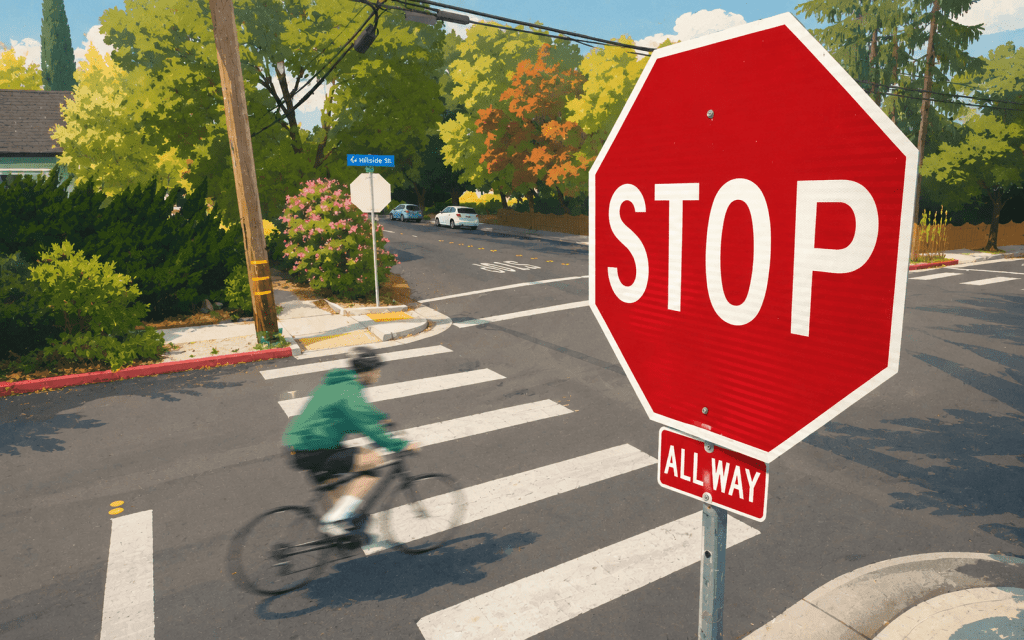
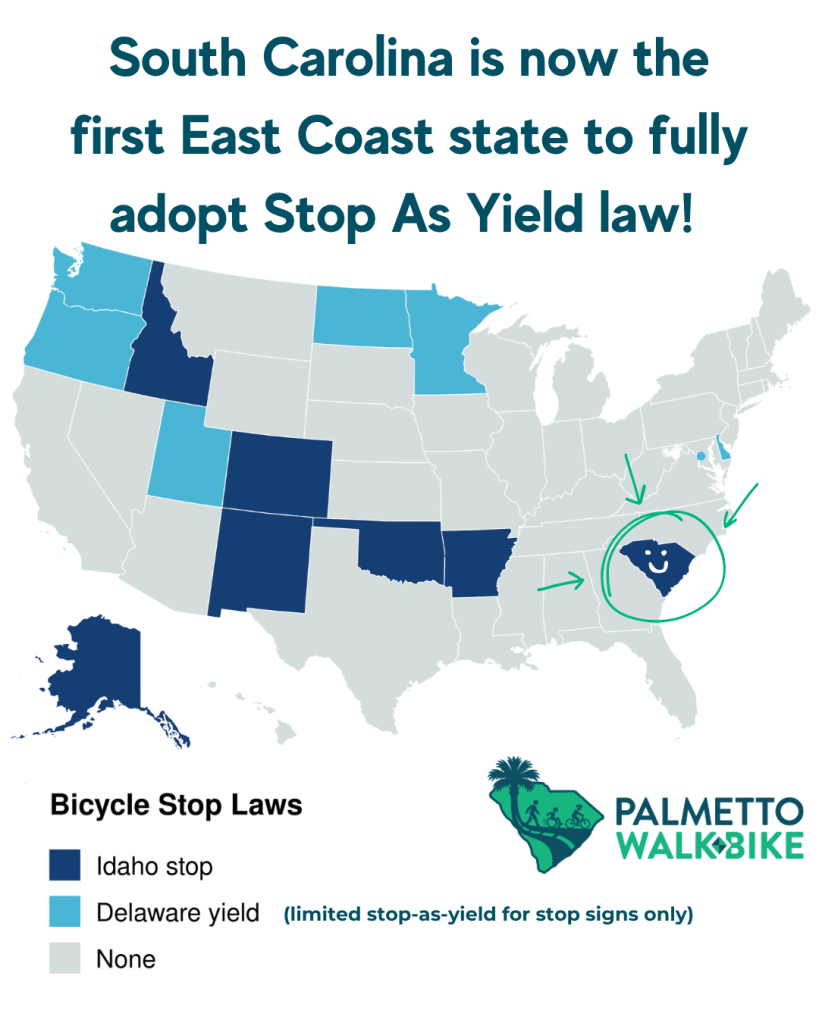
This year, South Carolina became the first state on the East Coast to fully adopt Stop as Yield legislation for people riding bicycles. Palmetto Walk Bike was proud to lead the effort to pass the Palmetto Stop, working partners across the state to build support for this legislation.
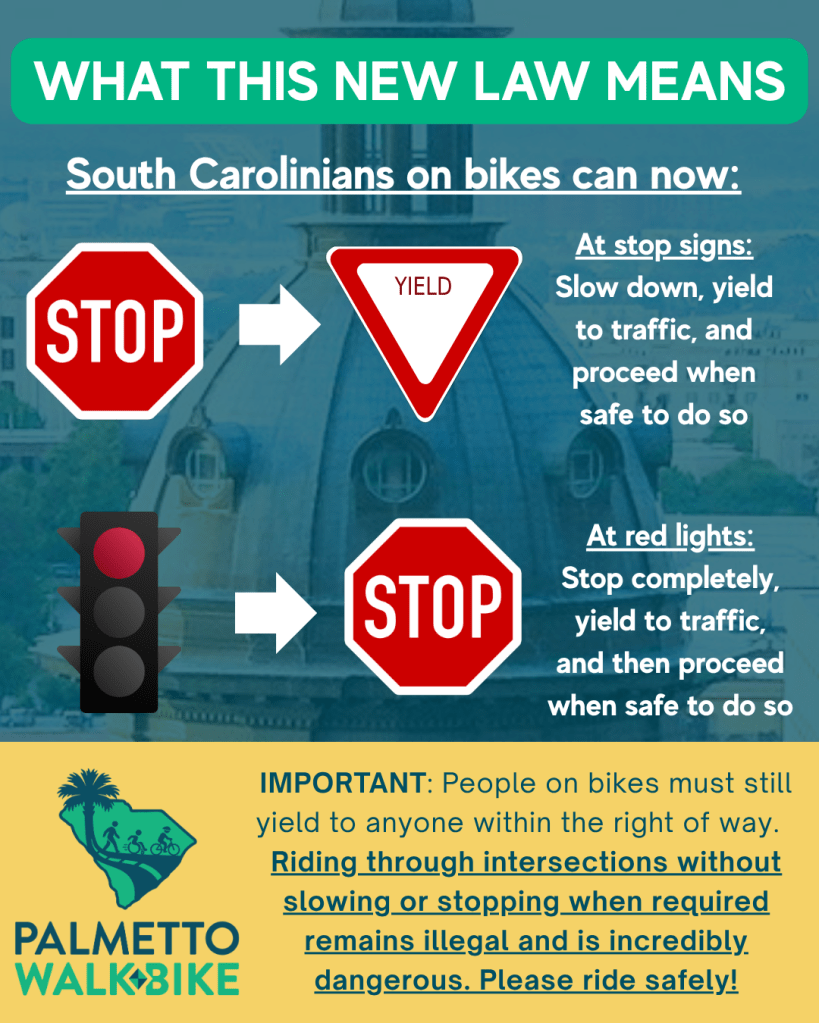
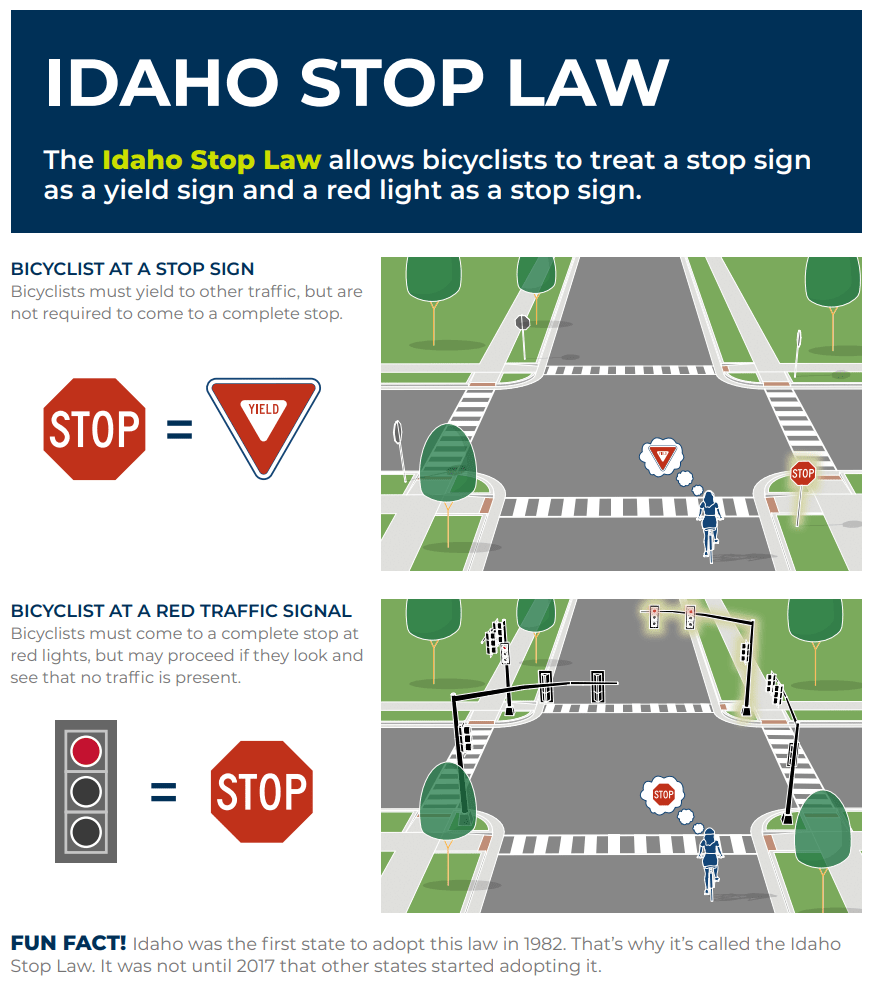
Signed into law in May, the Palmetto Stop allows people riding bicycles to treat stop signs as yields when it is safe to do so. At red lights, riders must first come to a complete stop before proceeding when it is safe.
South Carolina is now the 14th state to adopt a version of Stop as Yield. Here is some of the coverage from across South Carolina and beyond.
The Post and Courier
‘Stop as Yield’ bicycle bill turns into a South Carolina law. What does this mean for cyclists?
The Post and Courier looks at what the Palmetto Stop means for people biking in Charleston and how the new law will work on South Carolina streets.
FOX Carolina
“Palmetto Stop” New SC bill aims to protect cyclists at intersections
FOX Carolina explains the new law and how Stop as Yield can improve safety for people biking through intersections in the Upstate.
WSPA 7NEWS
New South Carolina law changes rules for bicyclists
WSPA breaks down the new rules and what people biking and driving should know about the change.
The Walking Spartan
The Palmetto Stop Is State Law in SC
Our friend Liv at The Walking Spartan takes a deeper look at how the Palmetto Stop became law and what it means for people biking in Spartanburg and South Carolina.
WRDW
South Carolina ‘stop as yield’ bicycle law takes effect
WRDW explains the Palmetto Stop as the new rules take effect across South Carolina.
California Bicycle Coalition
South Carolina Passed the Bicycle Safety Stop. When’s Our Turn?
CalBike looks at how PWB helped take the Palmetto Stop from an idea to state law in six months and what advocates in other states can learn from South Carolina.
As we told CalBike:
“If South Carolina can do it, California can. Come on now, y’all.”
The Palmetto Stop is a win for people who bike across South Carolina and an example of what focused, statewide advocacy can accomplish.
We’re proud to have helped lead this effort from an idea to state law, appreciate all of our partners who helped get it across the line, and are glad to see the conversation continue across South Carolina and beyond.
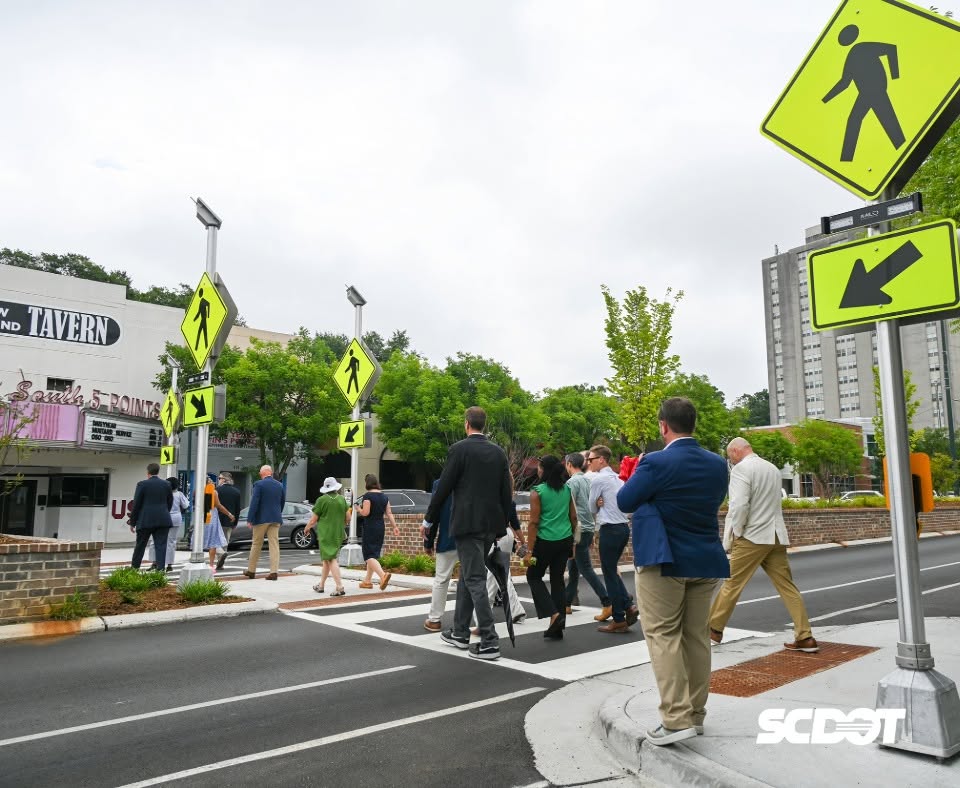
There is plenty more work ahead to make South Carolina safer for everyone walking, biking, and rolling. We’re just getting started.
 Palmetto Walk Bike